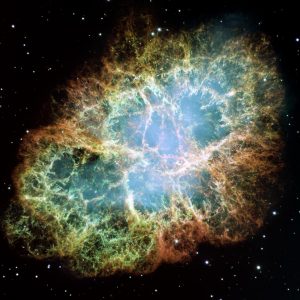
Eyeballs on the Universe
Eyeballs on the Universe: Webb’s Early Galaxy Problem
TL;DR
- The James Webb Space Telescope discovered massive, organized galaxies appearing far earlier than our models predicted
- These galaxies are too big and too evolved for their age—like finding a skyscraper in a week-old town
- This discovery suggests we may need to revise our understanding of galaxy formation and dark matter behavior
- Every answer Webb provides generates new questions about the early universe
The Discovery
When Webb’s first deep field image was released in July 2022, astronomers expected to see faint, primitive galaxies from the early universe. Instead, they found something that challenged our fundamental models: massive, well-organized galaxies that formed impossibly fast after the Big Bang.
Why This Matters
Our current models of galaxy formation predict a gradual process: small clumps of matter slowly coalescing over hundreds of millions of years. But Webb is showing us galaxies that appear fully formed in a fraction of that time—as if the universe had a fast-forward button we didn’t know about.
What It Could Mean
Several possibilities are on the table:
- Our galaxy formation models need revision – Perhaps the early universe was more efficient at building galaxies than we thought
- Dark matter behaves differently – The invisible scaffolding that helps galaxies form might have different properties in the early universe
- We’re misinterpreting the data – Though less likely, it’s possible these galaxies aren’t as massive or as old as they appear
🤓 Nerdy Appendix
This section contains technical details not included in the video.
Specific Galaxy Candidates
- JADES-GS-z13-0 – Spectroscopic redshift z=13.2, observed ~325 million years after Big Bang
- CEERS-93316 – Photometric redshift z~16.7 (pending spectroscopic confirmation)
- GLASS-z13 – Multiple candidates in the z=11-13 range showing unexpected stellar masses
Technical Background
Redshift and Lookback Time: Redshift (z) measures how much light has been stretched by cosmic expansion. Higher redshift = older/more distant. Webb can detect galaxies at z>13, corresponding to lookback times of 13.4+ billion years.
How Webb Measures Galaxy Age: Webb uses near-infrared spectroscopy to identify spectral features that have been redshifted from ultraviolet/visible wavelengths. The amount of redshift reveals the galaxy’s distance and age.
Comparison with Hubble: Hubble’s deepest observations could reach z~11 with great difficulty. Webb routinely observes galaxies at z>10 and has pushed to z>13, opening an entirely new window on the early universe.
Key Research Papers
- Robertson et al. (2023) – “Identification and properties of intense star-forming galaxies at redshifts z > 10”
- Labbé et al. (2023) – “A population of red candidate massive galaxies ~600 Myr after the Big Bang”
- Naidu et al. (2022) – “Two Remarkably Luminous Galaxy Candidates at z ≈ 10-12”
The Star Formation Problem
These early galaxies show stellar masses of 10^10 to 10^11 solar masses. To accumulate this much mass in <500 million years requires star formation rates that push or exceed theoretical limits—unless the initial mass function (IMF) was different in the early universe.
Production Notes
Archetype: SE-FIRST (SpaceEngine-driven visuals)
Software Used:
- SpaceEngine PRO (space simulation and visualization)
- OBS Studio (screen recording)
- DaVinci Resolve (video editing)
- ElevenLabs (voice synthesis)
Image Credits
- Webb Deep Field imagery: NASA, ESA, CSA, STScI
- Space simulations: SpaceEngine PRO
- Galaxy formation visualizations: Created in SpaceEngine using procedural generation
NASA imagery used under public domain guidelines. SpaceEngine content created under valid PRO license.
Further Reading
- James Webb Space Telescope Official Site
- Webb Telescope Public Outreach
- Latest Galaxy Research on arXiv
Share this content: