
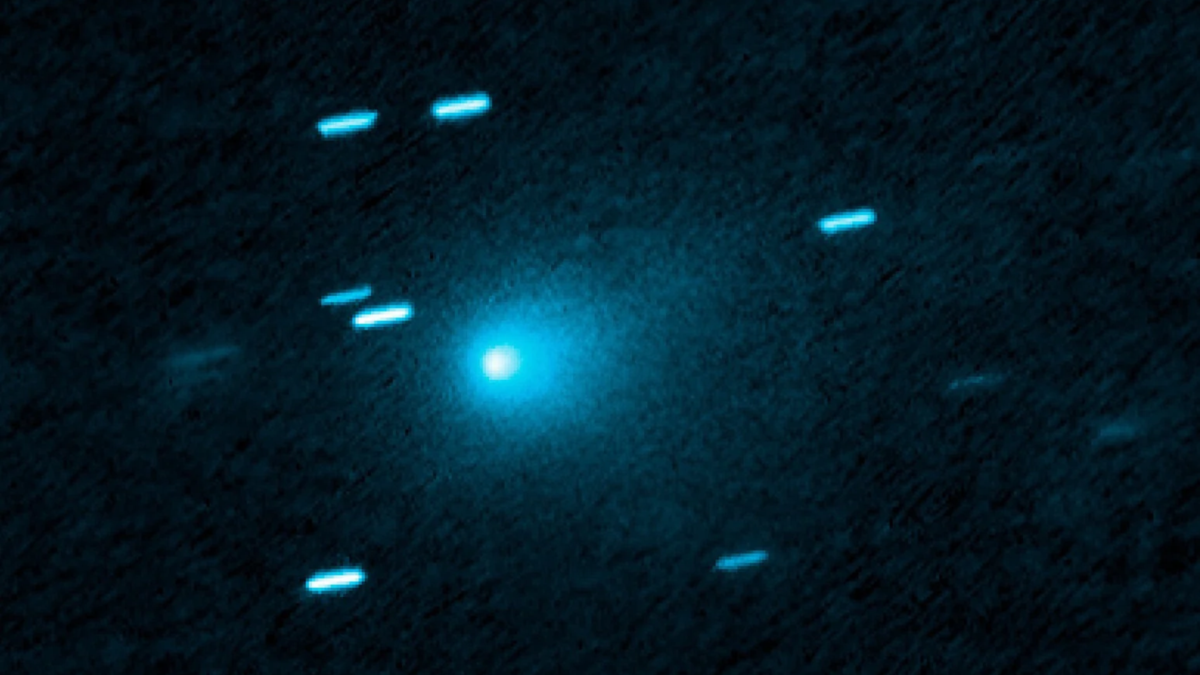
Webb's measurements put the deuterium-to-hydrogen ratio in 3I/ATLAS's methane 13 times higher than comet 67P's, higher than any measured in the Solar System. The researchers read that excess as ice formed in a cold, low-metallicity environment under a high rate of cosmic-ray irradiation.
Source: ScienceAlert
Image credit: ScienceAlert
Deuterium is heavy hydrogen: a hydrogen atom with an extra neutron. The ratio of deuterium to ordinary hydrogen in a comet's ice is a fingerprint of where that ice formed, because cold environments hold on to more deuterium than warm ones. Measuring it in methane, rather than in water, gives a second fingerprint from a different molecule, and this one came back extreme — 13 times the ratio in comet 67P, higher than anything measured in our own solar system.
3I/ATLAS is only the third interstellar object ever found passing through our solar system, after 'Oumuamua in 2017 and Borisov in 2019. It formed around some other star and was thrown loose, wandering between the stars until our Sun's gravity caught its attention for a few months. The researchers read the deuterium excess as ice that formed somewhere cold, poor in heavy elements, and bathed in cosmic rays — the kind of environment found in the early universe, before generations of stars had forged and scattered the heavier elements.
That is where the 10-billion-year reading comes from. The Sun is about 4.6 billion years old. If this material formed in a metal-poor environment under heavy cosmic-ray bombardment, it may predate our solar system by billions of years — a piece of another era, still frozen, arriving as a comet. The reading is an interpretation of one measurement, not a settled age, and more observations as the comet passes will test it.
Comets are time capsules because their ice has sat frozen since formation, barely changed. A comet from our own outer solar system tells us about our beginning. An interstellar comet tells us whether beginnings elsewhere worked the same way. This one says the ingredients may be far older than the star system they are visiting.
As an Amazon Associate I earn from qualifying purchases. If you buy through an active affiliate link, StarPixels may earn a commission at no additional cost to you.